
DFV Experiment Funnel for Product Teams
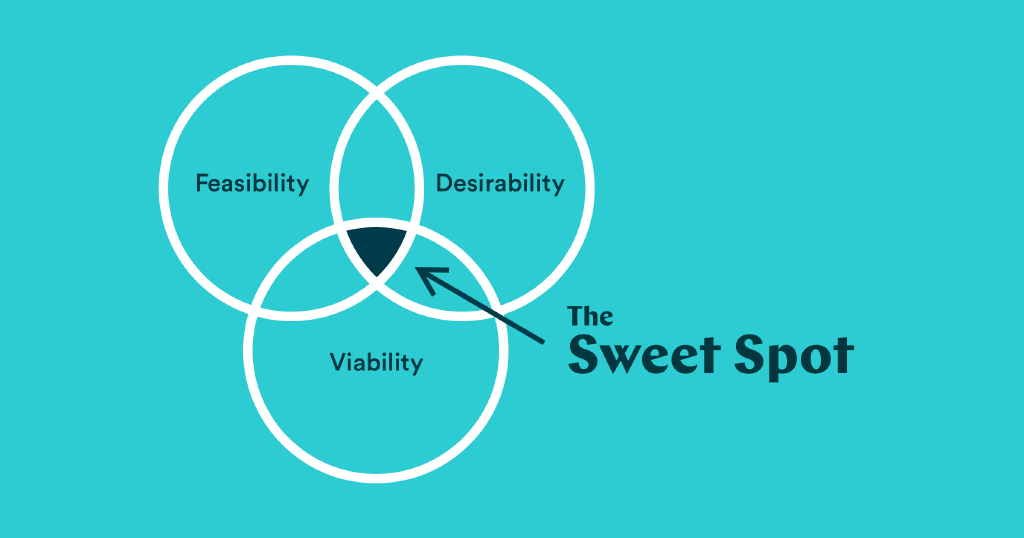
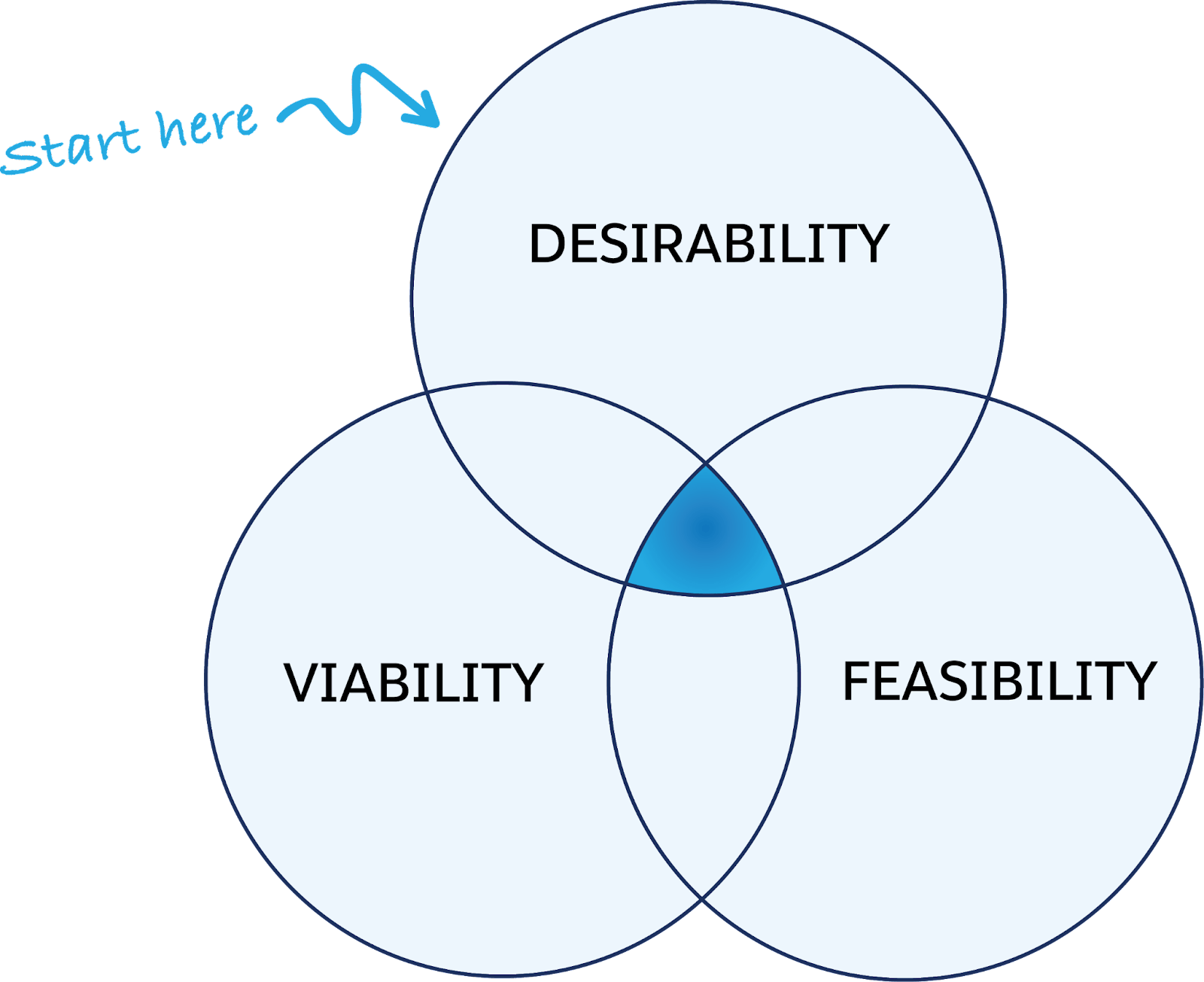
The biggest risk in product building is discovering a fatal flaw after months of work. DFV.XYZ™ pairs Desirability, Feasibility, Viability (DFV) with an experiment-driven funnel so teams collect evidence early and often. Each lens guides a different class of experiments, and together they form a repeatable DFV backlog.
Map DFV assumptions first
Start by listing assumptions for every lens:
- Desirability: problem importance, interest, adoption, and retention signals.
- Feasibility: technical capabilities, operational capacity, data quality, and compliance boundaries.
- Viability: willingness to pay, margin, strategic fit, and channel economics.
DFV LLM Prompts can generate assumption lists and cluster them by risk. Prioritize by impact and uncertainty so the funnel starts with the riskiest unknowns.
Desirability experiments
Desirability experiments test how people react. Common patterns:
- Problem interviews and discovery calls.
- Landing page tests with sharp value propositions.
- Prototype sessions and usability walkthroughs.
- Concierge or wizard-of-oz services to validate appetite.
DFV Design Prompts draft interview guides, value props, and success metrics. The aim is proof that people care enough to try, not just nice feedback.
Feasibility experiments
Feasibility experiments test how systems behave:
- Technical spikes and proof of concept builds.
- Load, latency, and resilience testing.
- Operational pilots with on-call, support, and incident drills.
DFV AI Prompts suggest experiment designs, acceptance criteria, and observability checklists. These tests answer whether the team can deliver the experience reliably at the promised quality.
Viability experiments
Viability experiments probe whether the business can sustain itself:
- Pricing and packaging trials with small cohorts.
- Monetized pilots to see how people pay in the real world.
- Unit economics modeling tied to actual usage data.
- Channel experiments to validate acquisition cost and conversion.
DFV.XYZ™ prompts help build dashboards and scenarios so viability is measured continuously, not at the end of the quarter.
Build a DFV experiment funnel
Combine the lenses into a single funnel:
- Desirability experiments: prove interest and relevance.
- Feasibility experiments: prove delivery and operations.
- Viability experiments: prove revenue and margin logic.
After each cycle, update the assumption list and re-rank experiments. DFV.XYZ™ treats this as a living backlog that adapts as new signals arrive.
Operating cadence
An experiment funnel works best with a tight cadence:
- Weekly DFV standups: review experiment status and new learnings.
- Demo days: show evidence, not just UI; include metrics and risks.
- Retro and reset: decide whether to move, pause, or pivot based on DFV data.
DFV logs document each test, which becomes an asset for investors, leadership, and buyers evaluating DFV.XYZ™.
Sample DFV experiment queue
- Desirability: run two value prop A/B tests for the top segment and five interviews to validate the winning variant.
- Feasibility: prototype the riskiest integration with a spike and measure latency, error rate, and ops burden.
- Viability: offer a paid pilot to a small cohort with three pricing options and measure conversion and gross margin.
- Overlap: run a blended test where users try the feature, operations run the support script, and billing flows are observed.
Tie each experiment to a stop condition. When a condition hits, update the backlog and re-rank. The queue stays short, and every item is tied to a DFV lens.
Metrics to watch
- Desirability: activation rate, time to first value, and week-two retention for early adopters.
- Feasibility: mean time to detect and recover, support touches per user, and deployment success rate.
- Viability: pilot revenue, contribution margin, and sales cycle length.
Publishing these metrics with experiment notes creates a living DFV dashboard. DFV.XYZ™ uses the same format across posts so evidence is portable.
Quick checklist
- Limit the experiment queue to items that address the biggest DFV risks.
- Timebox each experiment and record the result in a DFV log.
- Use DFV prompts to make test design faster, then share the outputs with your team.
Why this belongs to DFV.XYZ™
DFV.XYZ™ is a neon domain and a DFV practice that is available for acquisition. The DFV experiment funnel is part of that package: prompts, playbooks, and content you can reuse to run DFV evidence loops. If you want a DFV-branded engine for experiments, DFV.XYZ™ is ready to transfer along with the DFV posts and DFV gallery you see across the site.